Best AI English Speaking App of 2026: A Full Guide
A lot of learners are in the same place right now. They can read an email in English, understand a video, and finish grammar exercises. Then a real conversation starts, and the mind goes blank.
That gap feels frustrating because it doesn't come from laziness. It usually comes from pressure. Speaking happens live. There's no pause button, no time to check a rule, and no easy way to hide the fear of making a mistake. That's why choosing the right AI English speaking app matters. The best one doesn't just teach English. It helps learners feel calm enough to use it.
A good app should make speaking feel safer, simpler, and more regular. It should help shy learners start. It should help busy professionals fit practice into real life. Most of all, it should get learners to talk out loud instead of only tapping through lessons.
Here's a quick comparison first.
| App Type | Best For | How Practice Feels | Main Strength | Main Weakness |
|---|---|---|---|---|
| Open conversation app | Shy learners who freeze in real conversations | Private and low-pressure | Builds confidence through real speaking | Can feel uncomfortable if feedback is harsh or unclear |
| Pronunciation-focused app | Learners who are understood less clearly | Precise and corrective | Helps clean up sounds and stress | Doesn't always build real conversation flow |
| Structured lesson app | Busy learners who want a routine | Guided and predictable | Easy to follow every day | Can become passive if speaking time is limited |
Table of Contents
- Why Speaking English Can Feel So Hard
- What to Look For in an AI English Speaking App
- Top AI English Speaking Apps Reviewed
- Feature and Pricing Comparison
- Which App Is Right For Your Situation
- How to Build a Daily Speaking Habit
- Your Journey to Speaking with Confidence Starts Now
Why Speaking English Can Feel So Hard
The freeze is real
A learner can know the difference between past simple and present perfect, remember useful work vocabulary, and still freeze when someone asks, “Can you tell me more about that?” That moment is common. The problem isn't always English level. The problem is often pressure.
Many non-native speakers carry a quiet fear that every mistake will be noticed. They worry about pronunciation, grammar, and sounding slow. That fear makes the body tense, and tense people don't speak freely.
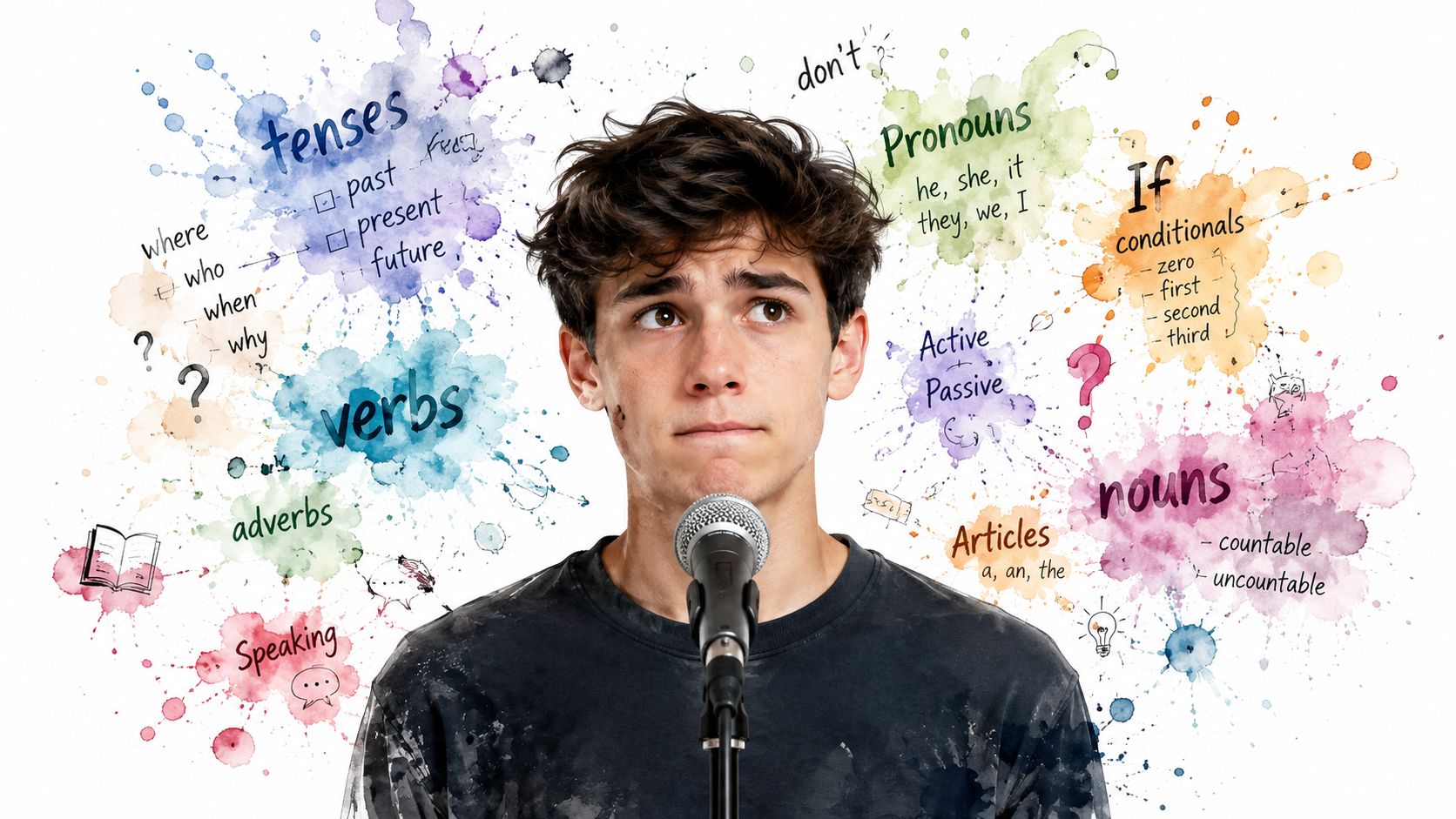
That feeling isn't rare. A study published in the Journal of Education and Technology shows that 72% of non-native English learners struggle with speaking confidence due to fear of judgment, which is why private, low-pressure practice matters so much, as noted in Loora's summary of that finding.
Learners dealing with this kind of fear often aren't bad at English. They're just undertrained in live speaking. That's a different skill. For extra help with that emotional side, this guide on English speaking anxiety and how to reduce it is useful.
Speaking confidence grows when learners get used to hearing their own voice in English.
Why private speaking practice helps
Private speaking practice changes the feeling first. That's important. If an app creates a space where learners can pause, try again, and speak without embarrassment, they usually talk more. More speaking means more comfort. More comfort means better fluency over time.
A strong AI English speaking app does three things well:
- It listens to real speech: The learner talks out loud, not merely reading.
- It responds naturally: The exchange feels like a conversation, not a test.
- It gives clear feedback: The learner sees what to fix without feeling punished.
That last point matters more than people think. Feedback should be honest, but it also needs to be calm. If every correction feels like a red pen from school, many learners stop speaking.
Practical rule: If an app makes a learner afraid to open the microphone, it's the wrong app.
Some learners need space before speaking to real people. Others already speak at work but want to sound smoother and more confident. In both cases, active voice practice beats silent study. The best tool is the one that helps learners speak again tomorrow.
What to Look For in an AI English Speaking App
Choose active speaking, not passive study
The first filter is simple. If an app mostly gives flashcards, multiple choice tasks, or grammar drills, it may help knowledge, but it won't do enough for real speaking. A learner gets better at speaking by speaking.
That isn't just common sense. Research from the University of Cambridge indicates that learners who practice speaking out loud with immediate feedback improve their pronunciation accuracy by 35% faster than those who only complete silent grammar drills, according to this University of Cambridge reference.
So the advice is direct. Learners shouldn't choose an AI English speaking app because it looks pretty or has many lessons. They should choose it because it gets them to open their mouth and respond in full sentences.
For learners who want more help with sound and clarity, this article on how to practice pronunciation in English is worth reading.
The checklist that actually matters
A useful app should be judged by feeling and function together.
- Conversation quality: Does the exchange feel natural enough to keep going? If every reply feels robotic or too short, the learner won't stay engaged.
- Feedback depth: Good feedback should cover pronunciation, grammar, vocabulary, and fluency. Not every learner needs all four every day, but shallow feedback slows progress.
- Transcription quality: The app should show what the learner said with reasonable accuracy. If transcription is messy, feedback becomes less useful.
- Accent options: This matters more than many reviews admit. Learners often want to practice with the accent they hear most at work, in school, or in daily life.
- Low-pressure design: A shy learner needs calm practice. A busy learner needs speed. The app should reduce stress, not add more steps.
Here's the simplest buying test.
- Can the learner speak in full answers, not one-word replies?
- Does the app explain mistakes clearly enough to fix them next time?
- Will the learner actually want to use it after a tiring day?
If the answer is no to any of those, the app probably won't become a habit.
The best speaking app doesn't feel like homework. It feels like safe repetition.
Many learners make one big mistake. They choose the tool that looks most academic. That often leads to more reading, more tapping, and less speaking. A better choice is usually the tool that feels conversational enough to build momentum.
Top AI English Speaking Apps Reviewed
For learners who need real speaking confidence
The strongest option for most learners is the one that focuses on actual spoken conversation, instant feedback, and a calm experience. That matters because confidence doesn't grow from silent study. It grows from saying something imperfect, getting feedback, and trying again.
An app in this category should let learners speak freely and receive feedback on grammar, vocabulary, fluency, and pronunciation after each turn. That mix is important. Grammar alone doesn't make someone sound natural. Pronunciation alone doesn't help a learner explain an idea clearly.
A good conversation-first app should also offer accent choices. Some learners need British English for work or study. Others hear American English every day. Some prefer Australian English. Matching the accent helps the practice feel more relevant and less abstract.
This kind of practice matters because learners who engage in daily spoken conversation practice with real-time correction achieve CEFR B2 fluency within 18 months, compared to 36 months for those relying solely on textbook study, according to the British Council reference discussed in this explanation of English conversation practice apps.
Here is what that kind of app experience looks like in practice.
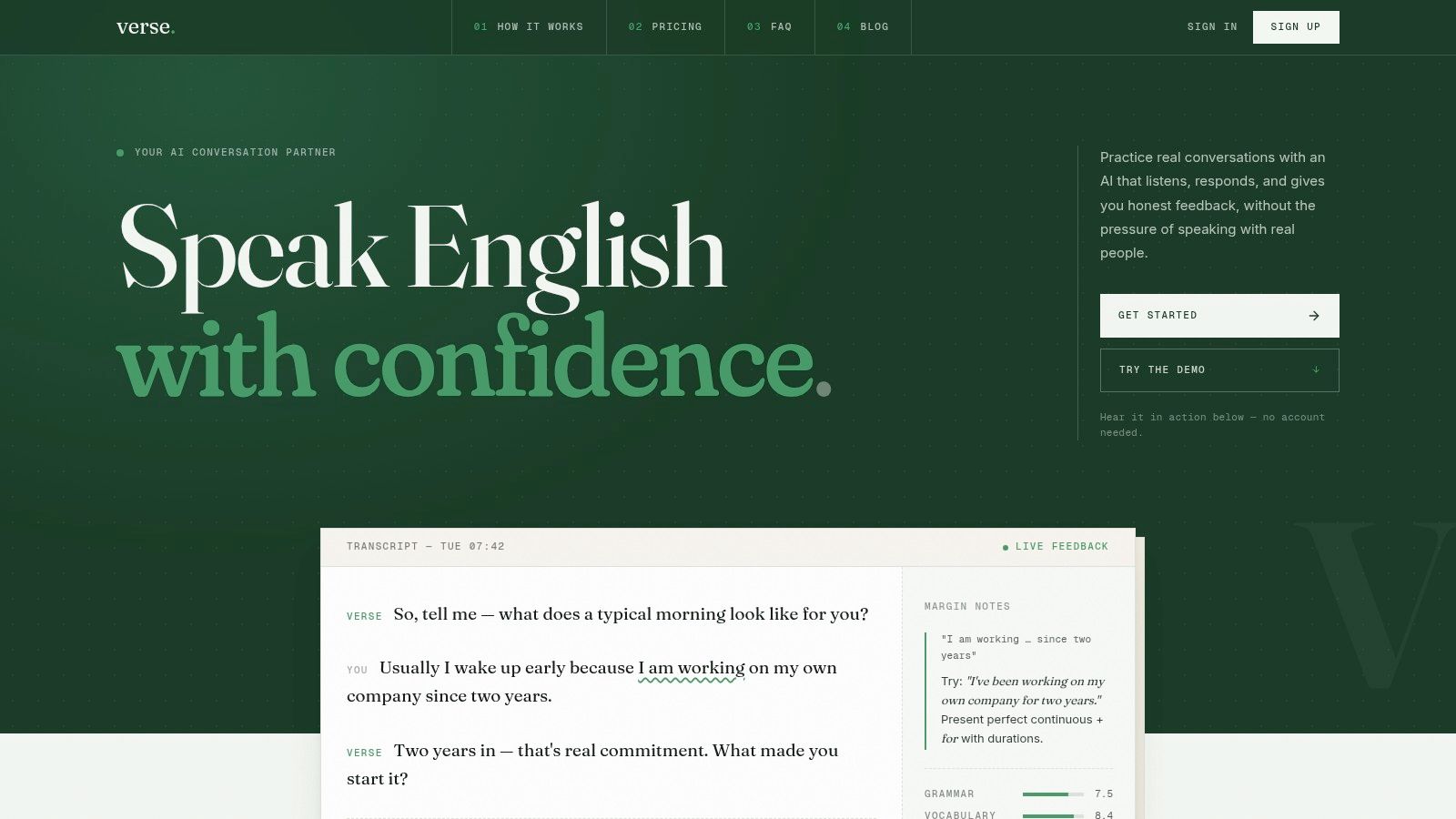
One clear example is Verse. It works best for learners who want to practice spoken English out loud, get honest feedback, and build real-world confidence instead of just collecting lesson points. It gives private spoken practice, replies naturally, and shows where the learner can improve in a direct but supportive way. Learners can also choose a British, American, or Australian accent.
Best fit: learners who know some English already, but need a judgment-free place to speak more often.
Verse is also simple to understand. It's a paid subscription at $12/month. There's also a free, no-signup demo on the homepage, which is useful for learners who want to test the feeling before paying. That matters because the feeling of the app is a big part of whether someone will keep using it.
For learners focused on pronunciation
Some learners don't mainly struggle with ideas. They struggle with being understood the first time. For them, a pronunciation-focused app can help.
This kind of app is best for learners who say, “People ask me to repeat myself,” or “My mouth still feels stiff in English.” It helps with sounds, stress, and clearer word production. That can reduce embarrassment fast.
Still, this type of app has a limit. It usually improves how someone says a sentence, but not always what they say next. That's why pronunciation practice works best as support, not as the full speaking plan.
Clear speech builds confidence, but confidence also needs spontaneous conversation.
A pronunciation-heavy app fits learners who want targeted correction and short drills. It doesn't fit learners whose main problem is freezing in open conversation.
For learners who want a guided daily path
Some people don't want open conversation right away. They want structure. They want to open the app, follow a lesson path, finish a session, and move on with the day.
That's a valid need. A structured app can help busy professionals, tired students, and people who lose motivation when choices feel too wide. It gives a predictable routine, which lowers resistance.
But learners should be careful here. Structure is useful only if it still includes real speaking. If a guided app turns into mostly tapping, matching, and repeating isolated lines, it may feel productive without doing much for live conversation.
A good structured app should include:
- Short speaking tasks: not just reading prompts
- Useful feedback: not only right or wrong signals
- Situation practice: meetings, travel, introductions, opinions
- A fast start: no long setup every day
For this personality type, the ideal setup is often mixed. A learner can use a guided path for consistency, then switch to open spoken practice for flexibility.
That's the key point across all three app styles. The best AI English speaking app isn't the one with the most features. It's the one that matches the learner's personality and gets them talking out loud often enough to feel less afraid.
Feature and Pricing Comparison
AI English Speaking App Comparison
The easiest way to choose is to stop asking which app is “best” in general and start asking which one fits the learner's daily reality. Some people need privacy. Some need speaking correction. Some need a routine that removes decision fatigue.
| App | Ideal User | Core Feature | Feedback Focus | Pricing Model |
|---|---|---|---|---|
| Verse | Shy learners, professionals, and learners who want real conversation practice | Spoken back-and-forth conversation with instant response | Grammar, vocabulary, fluency, pronunciation | Paid subscription, $12/month |
| Pronunciation-focused app | Learners who want clearer speech | Sound and pronunciation drills | Pronunciation and clarity | Varies |
| Structured lesson app | Busy learners who need a guided path | Step-by-step lessons | Limited speaking feedback or mixed feedback | Varies |
This table makes one thing clear. The categories are not competing for the exact same job. They solve different problems.
If a learner freezes when speaking, a conversation-first tool is usually the right place to start. If speech is unclear, pronunciation work helps. If consistency is the main problem, a structured routine may be the easiest entry point.
Which App Is Right For Your Situation
The shy professional
This learner reads and writes English well enough for work. Meetings are harder. Small talk before the meeting is even harder. The biggest problem isn't vocabulary. It's the feeling of being watched while speaking.
For this person, private spoken practice is the smartest choice. A conversation-first app works because it removes the social risk while keeping the speaking part real. The learner can practice introductions, opinions, updates, and workplace phrases without fear of interrupting anyone or sounding unprepared.
That's where a tool like Verse fits best. It gives judgment-free speaking practice with direct feedback and lets the learner repeat professional situations until they stop feeling heavy.

The student who needs speaking stamina
This learner knows grammar rules and can answer typical study questions. The problem comes when they need to speak for longer. After the first answer, the sentence flow starts to break. Pauses get longer. Confidence drops.
This learner often benefits from two layers:
- Conversation practice for longer answers
- Targeted pronunciation support for clarity
The main goal isn't perfection. It's building the ability to keep talking, recover after a mistake, and continue with enough calm to stay understood.
A strong speaker isn't someone who never makes mistakes. It's someone who can keep going after one.
The traveler who wants easy everyday conversation
This learner doesn't need formal English. They need useful English. Ordering food, asking for help, checking into a hotel, making light conversation, and solving small problems matter most.
A structured app can help at the beginning because it gives clear travel situations. But if the learner stops there, speaking may remain too scripted. Real travel conversation is messy. People talk fast. They ask unexpected questions. They change topic.
So the best fit is often a simple combination in one direction. Start with guided situations, then move quickly into open speaking practice. That gives the learner useful phrases and also the confidence to survive when the conversation stops following the script.
The core question is emotional. Does the learner need safety, precision, or structure first? Once that answer is clear, the app choice gets much easier.
How to Build a Daily Speaking Habit
Make practice small enough to repeat
Most learners fail because the plan is too big. They promise themselves a long daily study session, miss two days, then feel guilty and stop. Speaking practice works better when it's small.
Ten quiet minutes can be enough. A short session before work. A few spoken answers during lunch. A quick evening conversation while walking at home. Small practice is easier to repeat, and repeated practice is what matters.
This guide on daily English speaking practice gives useful ideas for keeping that routine realistic.
Use a simple speaking routine
A daily routine should feel almost boring in its simplicity.
- Start with one easy topic: work, weekend plans, food, or a recent problem.
- Speak for a short time: no pressure to sound smart.
- Check one or two corrections: not every mistake at once.
- Repeat the same topic the next day: this helps fluency more than always changing topics.
Learners who are curious can also try Verse's free, no-signup demo on the homepage to test one short speaking session without commitment. That's a good way to remove friction and begin with the smallest possible step.
The habit should be easy enough to keep on a tired day.
A learner doesn't need a perfect system. A learner needs a microphone, a few minutes, and the willingness to speak out loud again tomorrow.
Your Journey to Speaking with Confidence Starts Now
Speaking confidence doesn't arrive all at once. It grows in small moments. One clearer sentence. One faster reply. One conversation that feels less stressful than the last one.
The right AI English speaking app helps because it gives learners a place to practice without shame. But true progress comes from repetition. Not perfect repetition. Just honest, regular speaking.
Some learners need privacy first. Some need clearer pronunciation. Some need a routine that fits around work and family. That's fine. There isn't one perfect personality for learning English. There is only the next useful step.
A learner who speaks out loud every day, even briefly, is doing the work that builds confidence.
Keep it simple. Keep it kind. Keep speaking out loud.