Thank You Email After Interview: Tips for 2026 Success
A job interview often ends with two feelings at the same time. There is relief because the hard part is over, and there is worry because every answer starts replaying in the mind.
For many non-native English speakers, one more question appears after that. What should go in the thank you email after interview, and how can it sound polite, natural, and professional in English?
The good news is that this email doesn't need perfect English. It needs clear English. A short, thoughtful message can show respect, interest, and confidence. It can also help a candidate leave one more strong impression after the meeting.
Table of Contents
- Why a Thank You Email Matters More Than You Think
- The Perfect Timing and Subject Line
- How to Structure Your Thank You Email
- Templates for Different Interview Scenarios
- Common Mistakes for English Learners and Quick Fixes
- Conclusion Your Next Step to Speaking with Confidence
Why a Thank You Email Matters More Than You Think
Right after an interview, many candidates think the main work is finished. They wait, hope, and try not to overthink. But one small step still matters, and it matters more than many people realize.

A thank you email after interview is not just polite. It is a practical way to remind the interviewer who the candidate is, show care, and confirm interest in the role. According to Accountemps findings shared in this summary, 87% of hiring managers prefer to receive thank-you notes via email, 80% find these notes helpful when evaluating candidates, and only 24% of job seekers send one.
That gap matters. When many candidates skip the email, a thoughtful message can help one applicant stand out for a very simple reason. The applicant followed through.
Practical rule: A thank you email after interview works best when it sounds personal, not copied.
This is especially useful for English learners. During an interview, a candidate may forget a word, answer too briefly, or feel nervous. The follow-up email gives one more chance to communicate calmly and clearly. It can highlight one useful idea from the conversation and show professional manners without needing long or complex language.
A good interview follow-up also supports broader communication growth. It teaches the same skills needed in future meetings, presentations, and networking conversations. For readers preparing for interviews in English, English for job interviews can help build that wider confidence.
The Perfect Timing and Subject Line
Many candidates worry most about the body of the email. That makes sense, but two smaller details decide a lot before the message is even read. Those details are timing and subject line.
The timing rule is simple. Send the thank you email after interview soon. A verified guideline states that sending the email within 24 hours is the single most significant factor in perceived professionalism. The same source also notes that a common mistake is leaving out a specific detail from the conversation, which makes the email feel generic.
That means speed helps, but speed alone is not enough. A fast message with no personal detail can still feel weak.
When to send it
A candidate doesn't need to write the email in five minutes. But waiting too long makes the message less relevant.
A simple routine works well:
- Take notes first, right after the interview ends. Write down one topic, one challenge, or one friendly moment from the conversation.
- Draft the email the same day, while the discussion is still fresh.
- Send it before 24 hours pass, even if the interview felt informal or uncertain.
Send it while the conversation is still easy for the interviewer to remember.
For non-native speakers, this timing rule also reduces overediting. Many learners spend too long trying to make every sentence perfect. That often creates more stress and less clarity. Clear and timely is better than delayed and overworked.
What to write in the subject line
The subject line should be short and obvious. The interviewer should understand the purpose immediately.
A good subject line usually includes “Thank You,” the candidate's name, or the job title.
Examples:
- Thank You, Ana Silva
- Thank You, Ana Silva, Marketing Coordinator
- Thank You for the Interview
- Thank You, Daniel Kim, Customer Support Specialist
These subject lines work because they are easy to scan. They don't try to sound clever. They sound professional.
A weaker subject line often causes confusion, such as:
- Following Up
- Hello Again
- Quick Note
- Nice Meeting You
Those phrases are polite, but they don't clearly say what the email is about.
A candidate should also match the subject line to the tone of the company. If the interview was formal, use a more formal subject. If it was relaxed, the line can still stay simple. Simple is almost always the safer choice.
How to Structure Your Thank You Email
The hardest part for many English learners is not grammar. It is knowing what belongs in the email, and what does not. A simple structure solves that problem.
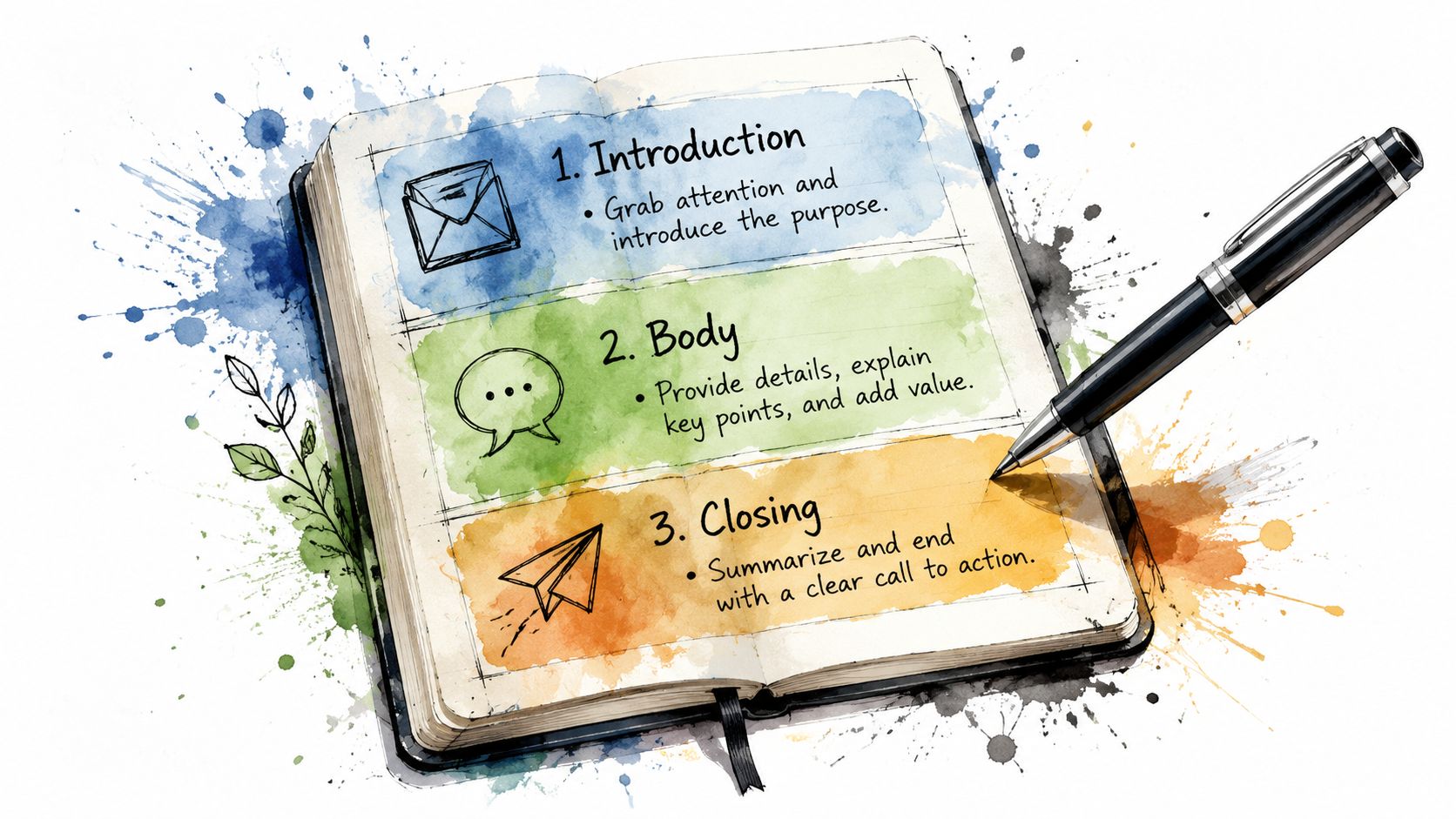
A clear guideline from this thank you email after interview writing guide says that a strong post-interview thank-you email should be 150 to 250 words across three short paragraphs. This includes one specific reference to the conversation and a clear restatement of interest in the position.
That gives candidates a useful target. The email should be short, focused, and easy to read.
The simple three paragraph format
The structure below is easy to follow and works in many industries.
| Paragraph | Purpose | What to include |
|---|---|---|
| First paragraph | Say thank you | Thank the interviewer for their time and mention the role |
| Second paragraph | Make it personal | Refer to one specific topic from the interview |
| Third paragraph | Close professionally | Restate interest and offer to provide more information |
Here is what that looks like in plain language.
Paragraph one should open with appreciation. It can mention the date of the interview or the position title. This helps the reader place the conversation quickly.
Paragraph two is the most important part. It shows attention. For example, if the interviewer spoke about a new team project, the candidate can mention that topic and briefly connect it to a relevant skill or experience.
Paragraph three should end with interest and a polite closing. It can say that the candidate is still excited about the role and would be happy to share anything else if needed.
Helpful reminder: Short paragraphs are easier to read than one long block of text.
A quick planning method before writing
Before typing, many learners benefit from speaking their ideas out loud. This sounds simple, but it helps a lot. Spoken practice can make writing more natural because the candidate hears where the sentence feels too stiff or unclear.
A candidate can prepare in three quick spoken steps:
- Say thank you out loud: “Thank you for meeting with me today about the sales assistant role.”
- Say one memory from the interview: “It was helpful to hear about the team's goal to improve customer response time.”
- Say one closing sentence: “The conversation made the role feel even more interesting.”
After that, writing becomes easier because the main ideas are already clear.
This is also where speaking practice supports writing confidence. Some learners like to rehearse sentences privately before they send a message. Tools that allow real spoken practice and honest feedback can make that process less stressful than silent study alone. For readers who want to hear how their professional English sounds, the guide to formal and informal English can also help with tone choices.
Templates for Different Interview Scenarios
Templates can reduce stress, especially for a candidate who knows what to say but struggles to shape the sentence in English. A template should not be copied word for word. It should be adjusted with real details from the conversation.
A key etiquette point is simple. This interview thank-you etiquette guide states that the subject line must be concise and clearly indicate the purpose, such as “Thank You – [Your Name] – [Job Title]”. It also says to address the interviewer by their specific name, spelled correctly, and avoid generic greetings.
That means “Dear Hiring Manager” is usually not the best choice after an interview. If the interviewer introduced themselves as Priya, Marcos, or Dr. Chen, the email should use that exact name correctly.
Template for a first interview
This version works well after an initial conversation.
Subject: Thank You, Lina Hassan, Project Assistant
Dear Ms. Patel,
Thank you for taking the time to speak with me today about the Project Assistant role. It was a pleasure to learn more about the team and the responsibilities of the position.
The part of the conversation that stayed with me most was your description of the team's work across several deadlines at once. That environment sounds both challenging and rewarding. The discussion also confirmed how useful careful organization and clear communication are in this role, and those are skills this candidate has continued to develop.
Thank you again for the opportunity to interview. The conversation increased enthusiasm for the position, and any additional information can be provided if helpful.
Best regards,
Lina Hassan
Why it works:
- Clear opening: It starts with thanks right away.
- Specific detail: It mentions one real topic from the interview.
- Calm ending: It shows interest without sounding pushy.
Template for several interviewers
When several people join the interview, each person should receive a separate email with a small change in the middle. The opening and closing can be similar, but the personal detail should be different.
Example for one interviewer:
Subject: Thank You, Mateo Ruiz, Operations Analyst
Dear Mr. Green,
Thank you for meeting with me today and for sharing your perspective on the Operations Analyst role. It was helpful to hear how the team works across departments.
The explanation about reporting challenges was especially useful. The conversation made it clear that the role requires both attention to detail and flexibility, and that combination is very appealing.
Thank you again for your time. Interest in the role remains strong, and any further information can be shared if needed.
Best regards,
Mateo Ruiz
If another interviewer focused on training or team culture, the second paragraph should mention that instead.
For readers who want more natural follow-up phrases, spoken examples for “I wanted to follow up” can help make email language sound smoother.
Template for a final round interview
A final round message can sound slightly more direct because the candidate usually knows more about the role.
Subject: Thank You, Sara Nabil, Client Success Manager
Dear Jamie,
Thank you for the opportunity to speak again about the Client Success Manager position. It was valuable to learn more about the company's goals and the team's priorities for the coming months.
The discussion about client retention was especially interesting. Hearing how the team balances fast support with long-term relationships made the position feel like an even stronger match. The conversation also reinforced how important thoughtful communication is in this role.
Thank you again for your time and consideration throughout the process. Continued interest in the position is strong, and it would be a pleasure to contribute to the team.
Kind regards,
Sara Nabil
Why this tone fits:
- It sounds warm but still professional.
- It reflects deeper knowledge of the role.
- It avoids sounding too casual even if the process has become familiar.
Template after a rejection
A polite response after rejection can leave a good impression for future roles. It should be short, respectful, and professional.
Subject: Thank You, Kenji Sato
Dear Ms. Alvarez,
Thank you for letting me know about the hiring decision, and thank you again for the opportunity to interview for the position. It was a pleasure to learn more about your team and work.
Although this candidate is disappointed not to move forward, appreciation remains for the time and consideration you shared during the process. The conversation was valuable and left a positive impression of the organization.
Please keep this candidate in mind for future opportunities that may be a good fit. Thank you again, and best wishes to the team.
Kind regards,
Kenji Sato
This kind of message matters because professional communication is not only for good news. It is also for difficult moments.
Common Mistakes for English Learners and Quick Fixes
Most problems in a thank you email after interview are small. That is encouraging, because small problems are easy to fix.
One rule should stay firm. This professional communication guidance says that the thank-you email must be sent within 24 hours after the interview, and waiting longer than one week significantly reduces its impact. So even when the English is not perfect, the email should still be sent on time.
Mistake one sounds too generic
Many learners choose very safe language, but safe language can become vague.
A generic sentence:
Thank you for the interview. It was nice to meet you. I am very interested in the job.
This is polite, but it could be sent to any company.
A stronger version:
Thank you for speaking with me about the coordinator role. It was especially helpful to hear how the team is improving communication between offices.
The second version sounds more human because it includes one real detail.
Quick fix: Before sending, check whether one sentence could fit any interview anywhere. If yes, add one specific detail.
Mistake two sounds too formal or too casual
English learners often move to one extreme or the other. Some write as if they are sending a legal letter. Others sound like they are texting a friend.
A tone that is too formal:
- “I hereby express my deepest gratitude for the distinguished opportunity.”
A tone that is too casual:
- “Hey, thanks a lot, it was awesome chatting.”
A balanced tone is better:
- “Thank you for taking the time to speak with me today.”
Quick fix: Choose words that are polite and common. Professional English does not need fancy vocabulary.
Mistake three small grammar worries cause delay
Some candidates keep editing because they are afraid of one article, one preposition, or one verb tense. That fear is understandable, but it often creates a worse problem. The email gets sent too late.
A few minor grammar mistakes usually matter less than a message that is clear, personal, and punctual.
Helpful editing checks:
- Read names carefully: Check spelling of the interviewer's name and company name.
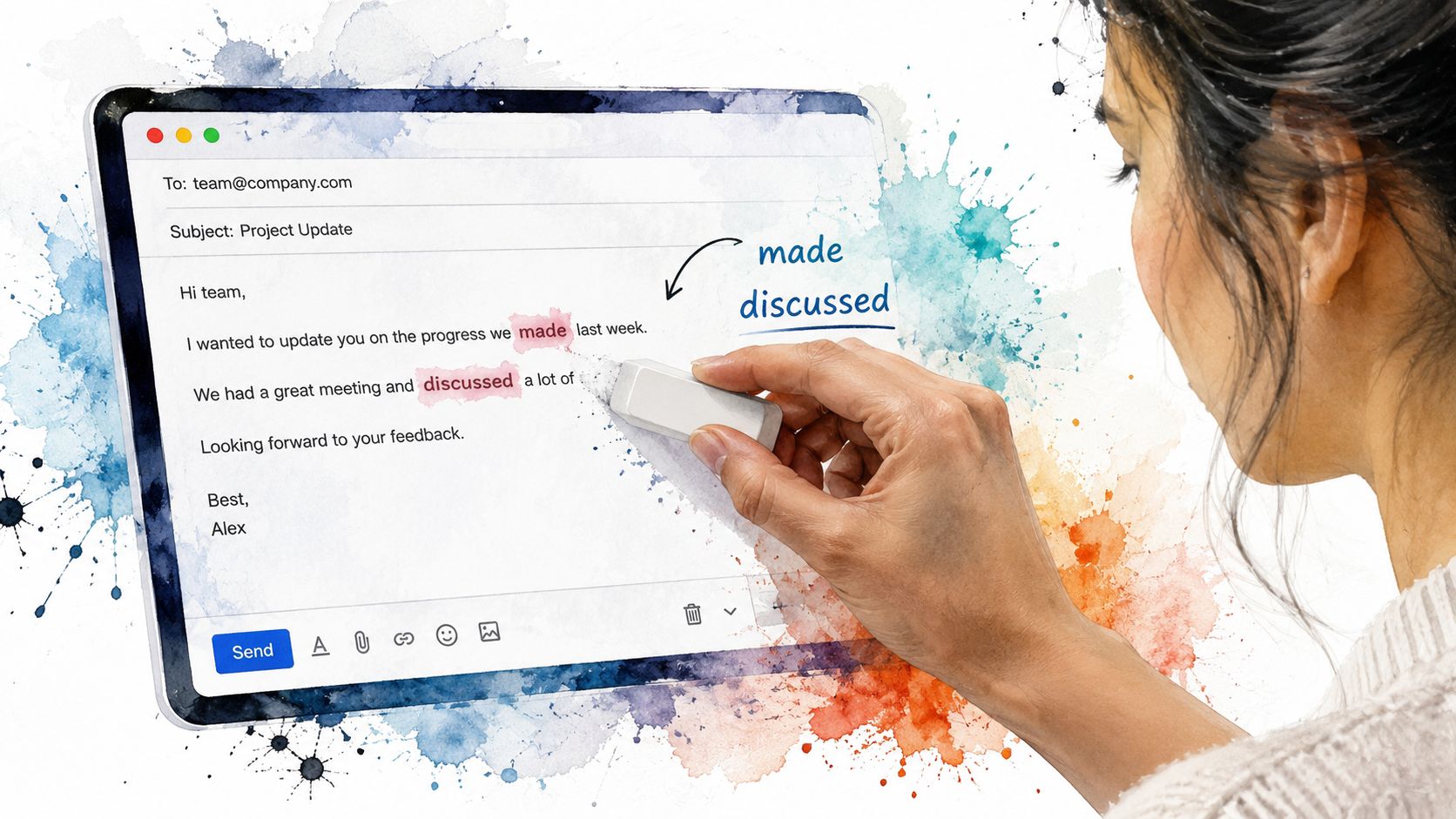
- Read the email out loud: Awkward phrases become easier to hear.
- Check verb consistency: Keep past events in the past, and current interest in the present.
- Cut long sentences: If one sentence feels hard to breathe through, split it into two.
Reading out loud helps many learners notice tone, rhythm, and small mistakes before pressing send.
This is one reason spoken practice supports writing. When a learner says a sentence first, it becomes easier to notice whether it sounds natural. Real spoken practice with honest, judgment-free feedback can help learners hear better phrasing and build confidence in both speaking and writing. Verse focuses on that kind of out-loud practice, and learners can also try the free, no-signup demo to rehearse professional English privately.
Conclusion Your Next Step to Speaking with Confidence
A strong thank you email after interview does not need perfect vocabulary or advanced grammar. It needs good timing, a clear structure, and one personal detail that shows real attention.
For non-native English speakers, that is good news. The goal is not to impress with difficult words. The goal is to communicate clearly, warmly, and professionally. That same skill helps in interviews, meetings, and everyday work conversations.
A short follow-up email can do more than support a job application. It can remind a learner that professional English becomes easier with practice. Each sentence written carefully, and each idea spoken out loud, builds more confidence for the next opportunity.
Practice a few lines out loud before writing. Then say them again after writing. Step by step, spoken English starts to feel more natural, and confidence grows with it.