How to Pronounce Understand: A Simple Guide for Learners
A lot of English learners know this moment. They can read understand easily, but when they try to say it out loud, the word feels heavy or unclear. The mouth rushes through the middle, the stress lands in the wrong place, or the word comes out flatter than expected.
That's normal. Learning how to pronounce Understand isn't only about memorizing symbols on a page. It's a physical skill. The lips, jaw, tongue, and voice all need to work together, a bit like learning a short movement pattern in music or sport.
This word becomes much easier when it's felt, not just studied. A learner can train the beat of the word, notice where the tongue moves, and repeat it out loud until the shape starts to feel natural.
Table of Contents
- Why 'Understand' Can Be a Tricky Word
- Syllable Breakdown and Word Stress
- Mouth and Tongue Position for Each Sound
- Common Pronunciation Mistakes and Accent Tips
- How to Practice and Get Feedback
- Your Next Step to Confident Speaking
Why 'Understand' Can Be a Tricky Word
Many learners expect common words to be easy. Then they meet a word like understand and get surprised. It looks simple because it's familiar, but the spoken version has quick weak sounds and one strong final beat.
That combination can confuse the ear. A learner may say every syllable with the same force, or may press too hard on the first part, because the spelling seems to suggest it. English often doesn't work that way.
It's not only a reading problem
Pronunciation lives in the body. When a word feels awkward, the problem usually isn't intelligence or memory. The mouth just hasn't built the movement yet.
A helpful way to think about it is this:
- Reading shows the map, but it doesn't train the muscles.
- Listening gives a model, but it doesn't guarantee control.
- Speaking out loud builds the habit, because the body starts to remember the pattern.
Practical rule: If a word feels difficult, slower and louder practice usually helps more than silent study.
Many learners also get stuck because they try to say the whole word perfectly on the first try. That creates tension. The jaw tightens, the middle sound disappears, and the final stressed syllable loses power.
A word can be trained in small physical steps
It helps to treat this word like a short exercise. First, feel the rhythm. Then notice the mouth shape. Then say it in a sentence. This step-by-step approach is often much easier than trying to copy the whole word at full speed.
A learner doesn't need a perfect accent to say understand clearly. Clear stress, a relaxed middle syllable, and a strong ending already make a big difference. Once the body learns that pattern, the word usually starts to feel more natural in conversation.
Syllable Breakdown and Word Stress
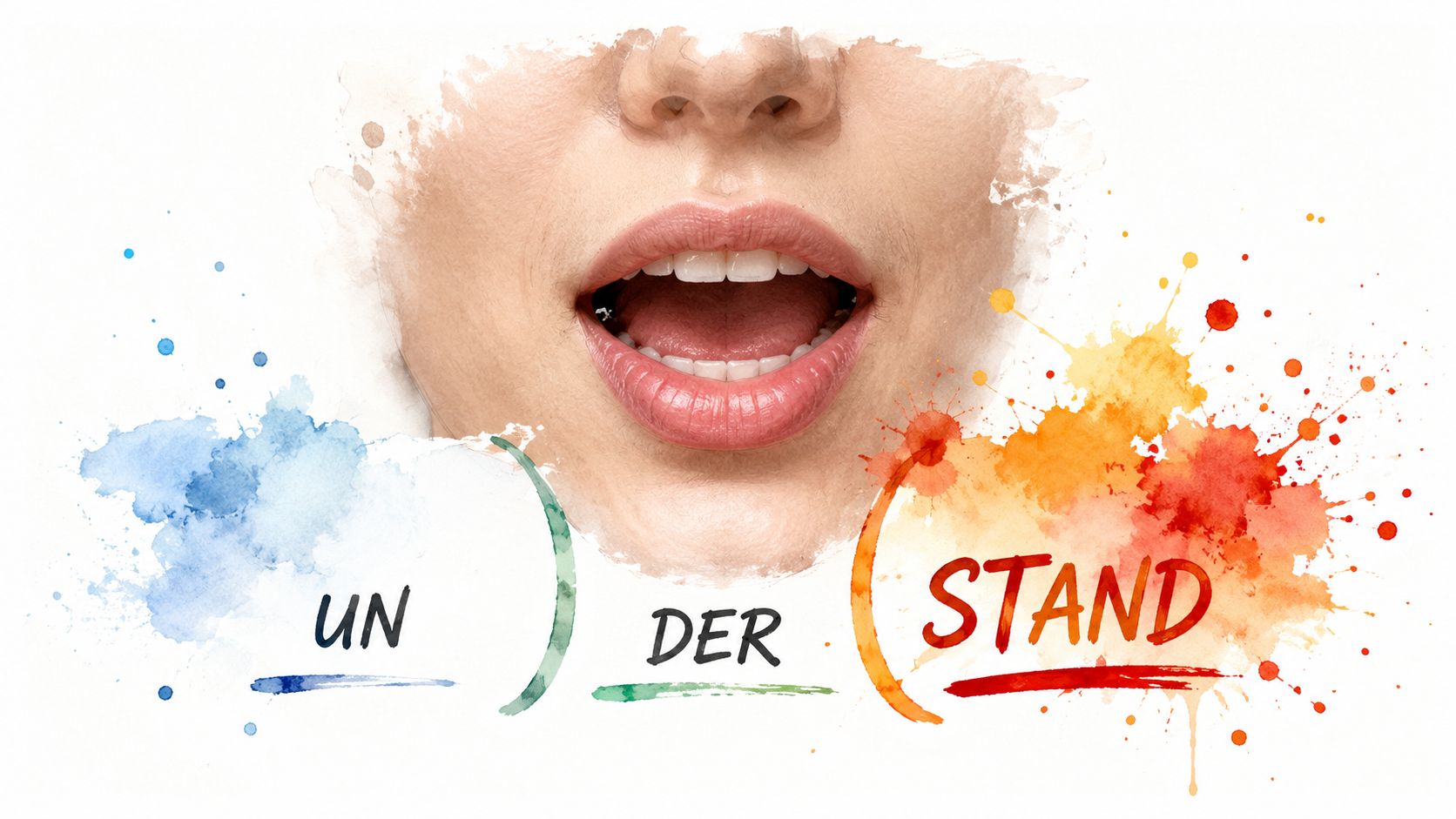
The fastest way to improve this word is to stop seeing it as one long block. It has three syllables, and each one has a job.
Three small parts, one clear rhythm
According to YouGlish pronunciation data for understand, the word has 396,076 documented pronunciation instances and is consistently broken into three syllables, UN + duh + STAND, with primary emphasis on STAND.
That rhythm matters more than many learners expect. English listeners often use stress to recognize words quickly. If the rhythm is off, the word can sound less natural even when the consonants are mostly correct.
A simple way to feel it is a drum beat:
| Part | Sound feeling | Stress |
|---|---|---|
| UN | short, light | weak |
| duh | quick, relaxed | weak |
| STAND | longer, stronger | strong |
This is the pattern: da da DUM.
How to feel the stress in the body
A learner can tap a finger on the table while saying the word.
- Tap lightly on UN
- Tap lightly on duh
- Tap more strongly on STAND
That last beat should feel like the word lands there. The voice becomes firmer. The mouth opens a little more. The sound carries more energy.
The ending should sound like the destination of the word, not an extra piece added at the end.
Another helpful trick is to clap the word. Two small claps won't work well here, because the word needs three beats. The final clap should be the clearest one.
Learners who want a simple way to check this rhythm can try a word stress checker for spoken English practice. It helps make the beat of the word easier to notice.
A common problem appears when someone says UN-der-stand with heavy force at the start. That sounds more like a list of parts than one natural English word. The first two syllables should move quickly. The last syllable should carry the weight.
When this rhythm becomes automatic, the whole word often gets smoother right away. The learner stops pushing every sound equally, and the word starts to flow.
Mouth and Tongue Position for Each Sound
The rhythm gives the word its shape. The mouth movements give it clarity. Through these elements, many learners finally feel what the word is supposed to do.
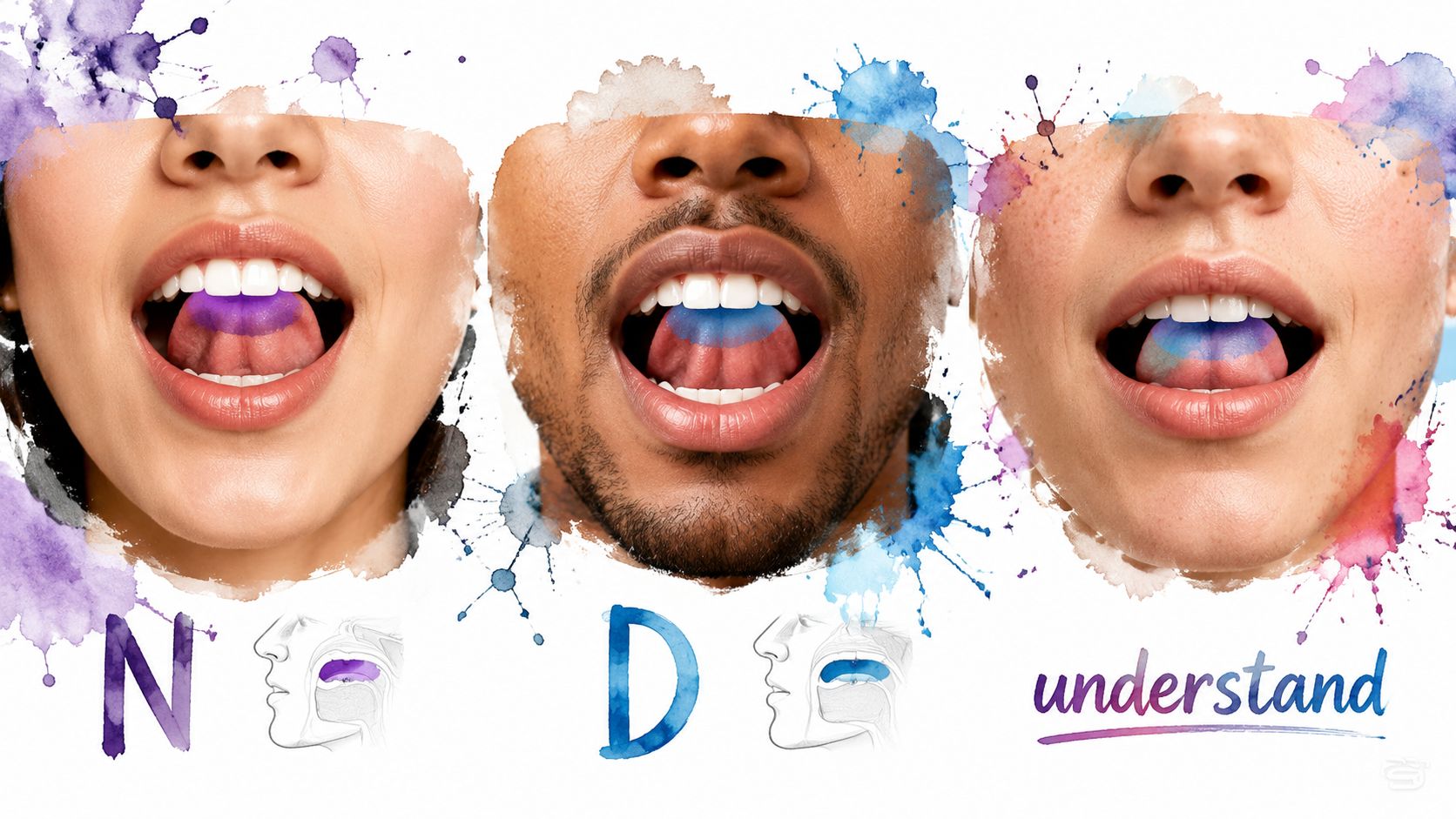
Breaking the word into /ˌʌn/ + /dɚ/ + /ˈstænd/ allows separate practice before putting everything together, a technique described in this pronunciation guide for understand. Learners who want more help with vowel sounds can also read this guide on English vowel pronunciation.
Start with the first syllable
The first sound is /ʌ/, the vowel in un.
The jaw should stay relaxed. The mouth opens a little, not too wide. The tongue sits low and central, not pushed forward. The sound is short and simple.
A learner can think of this sound as a soft, central vowel. It shouldn't sound too round or too dark. If the lips become very round, the sound may drift away from the target.
Helpful body check:
- Jaw: loose
- Lips: relaxed, not rounded
- Tongue: low and resting in the middle
- Voice: short, light start
Then the n closes the syllable. The tongue tip touches the ridge behind the top teeth for a quick finish.
The fast middle sound
The middle syllable is the part many learners blur too much or pronounce too heavily. It should be quick.
In many accents, this middle vowel is a relaxed central sound. The mouth doesn't need a dramatic shape here. That's why this syllable often feels smaller and less important than the ending.
A useful image is a small bridge. The mouth moves across it without stopping there for long.
If the middle syllable gets too much attention, the word starts to sound slow and choppy.
The tongue should stay calm. The sound should pass through quickly. This is one reason silent study doesn't help enough. A learner needs to feel the speed of the movement while speaking.
Finish strong with stand
The last part, stand, carries the word. The vowel /æ/ needs a more open mouth shape than the earlier vowels.
The jaw drops a bit more. The tongue moves forward. The sound sits brighter in the mouth. Then the word closes with nd, which gives a firm ending.
A learner can try this sequence:
- Say un
- Say duh
- Pause
- Say STAND with more energy
- Put them together: un-duh-STAND
The goal isn't force. It's contrast. The first two parts stay light. The last part becomes clear and strong.
This physical contrast is what helps the word sound natural in real speech.
Common Pronunciation Mistakes and Accent Tips
You say understand in a sentence, but the listener hesitates for a split second. That usually does not happen because of one terrible sound. It happens because the rhythm of the word feels off.
The good news is that this word gives clear physical clues. If a learner pays attention to where the voice gets stronger, and how quickly the mouth moves through the middle, the word becomes much easier to control out loud.
Mistakes that change the rhythm
A very common mistake is stressing the first syllable too much. That makes the word sound like UNderstand, even though the strongest beat should arrive on stand.
Another problem is giving every syllable the same weight. English words rarely move like three equal drum hits. Understand works more like a small step, a quick step, then a firm landing.
Here are the mistakes to listen for:
- Heavy first syllable: un sounds too loud or too long
- Middle syllable too clear: the mouth lingers there instead of passing through quickly
- Weak ending: stand does not carry enough energy
- Flat rhythm: all parts sound equally strong
A simple test helps. Say the word once. Then ask, “Did my voice land hardest on stand?” If not, try again and let the ending do more of the work.
Accent tips you can feel in the mouth
The biggest accent difference is usually in the middle syllable.
In a more British-style pronunciation, the middle vowel stays very relaxed and neutral. The tongue remains calm in the center of the mouth. In a more American-style pronunciation, that middle sound can carry a light r color, so the tongue pulls back a little.
| Accent style | Middle sound feeling | What the mouth does |
|---|---|---|
| British-style | short, relaxed, neutral | tongue stays centered |
| American-style | relaxed with light r-color | tongue pulls back slightly |
Neither choice is better. What matters is picking one model and repeating it enough that your mouth remembers it.
This is why spoken practice matters more than silent study. A page can show symbols, but your mouth has to learn the movement. If you want a simple routine for that, try this guide on how to practice pronunciation in English.
One last tip. If the word feels hard at normal speed, do not force it louder. Make it more physical instead. Keep the start light, let the middle pass quickly, and feel the final stand land with a clear beat. You can do that.
How to Practice and Get Feedback
You say understand alone and it sounds fine. Then you use it in a real sentence, and the word suddenly feels slippery. That is normal. Pronunciation often changes once the mouth has to keep moving.
Short speaking drills that help
The goal is to train the word while your mouth stays in motion, like practicing a dance step inside the full routine instead of standing still and reading the steps on paper.
Start with three rounds:
- Say it alone, slowly
- Say it alone at normal speed
- Say it in a short sentence
Use these lines out loud:
- I understand the question.
- Do you understand me?
- She understands the problem.
- They didn't understand the instructions.
As you say each sentence, pay attention to the physical feeling, not just the sound. Does the word stay smooth from start to finish? Does your mouth rush in the middle? Does the ending still come through clearly once other words surround it?
A simple practice pattern works well. Listen. Repeat. Record. Listen again.
Clear pronunciation improves faster when the learner says the word, hears it back, and makes one small adjustment right away.
If you want a step-by-step routine for that process, this guide on how to practice pronunciation in English gives a simple structure you can use.
Why recording helps
Recording gives you a second pair of ears. While speaking, it is easy to feel that a word was clear just because you knew what you meant. When you listen back, you hear what came out.
That matters with understand because small problems can hide during live speech. The middle may blur. The ending may lose energy. The whole word may shrink when the sentence gets faster. A short recording makes those patterns easier to catch.
Keep the feedback process small and specific. Record one sentence. Listen once. Pick one thing to improve. Then say it again. That kind of spoken loop teaches the mouth much faster than silent reading or memorizing symbols alone.
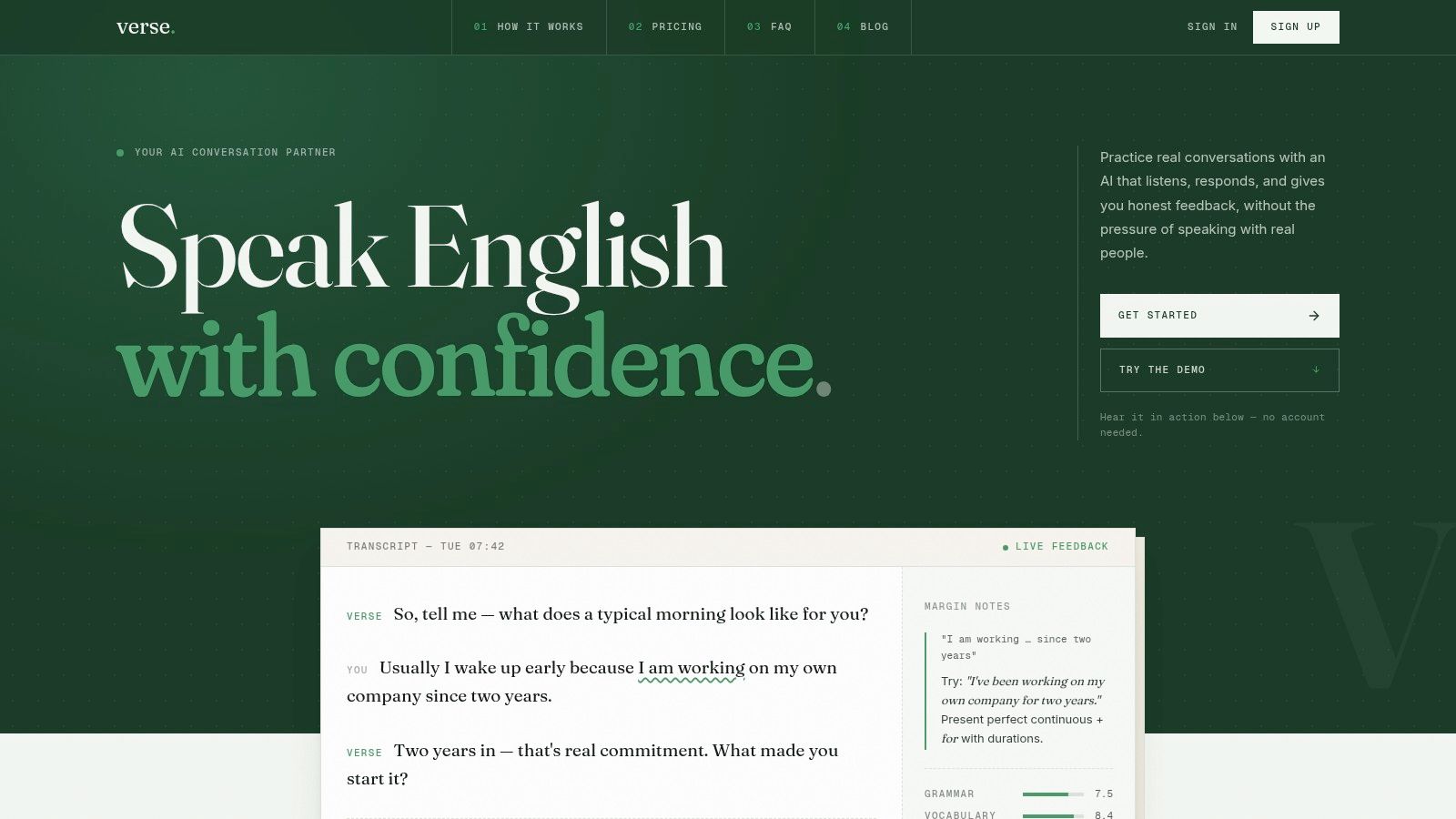
For learners who want low-pressure speaking practice, Verse gives instant feedback on spoken English, including grammar, vocabulary, and fluency. Learners can choose a British, American, or Australian accent. The homepage also includes a free, no-signup demo, so a learner can say a sentence like “I understand” and hear how it lands in real time. Verse itself is a paid subscription at $12/month.
Your Next Step to Confident Speaking
Understand becomes easier when a learner stops treating it like a spelling problem and starts treating it like a movement. The word has a clear beat, a quick middle, and a strong ending. Once those parts are practiced out loud, the word usually feels much less intimidating.
Small spoken repetitions matter. A learner doesn't need to sound perfect today. They just need to keep training the mouth and ear together. With steady out-loud practice, clear words start turning into more confident speech.