How Do You Pronounce Jalapeno: American & British Guide
The most common American English pronunciation is hah-lah-PEN-yoh. Each part matters, and the sounds become much easier once the mouth and tongue movements are broken down clearly.
A lot of English learners meet this word in a very normal moment. They're at a restaurant, reading a menu, and everything is going well until one ingredient creates doubt. Should they say it out loud, point at the menu, or choose a different dish?
That hesitation is common with jalapeño because it looks familiar and unfamiliar at the same time. It uses Latin letters, but the sounds don't fully follow standard English spelling rules. The good news is that this isn't just a word to memorize. It's a physical speaking skill that can be practiced, slowly and confidently, until it feels natural.
Table of Contents
- Saying Jalapeño With Confidence
- The Sounds of Jalapeño Broken Down
- Common Mistakes and How to Fix Them
- Pronunciation in the Real World
- Practice Your Pronunciation Out Loud
Saying Jalapeño With Confidence
Someone stands at a counter, sees tacos with jalapeños on the menu, and suddenly stops speaking for a second. That pause usually isn't about vocabulary. It's about confidence.
The encouraging part is that the most useful version for everyday American English is simple to start with: hah-lah-PEN-yoh. Once the rhythm feels clear, the word stops feeling scary and starts feeling familiar.

Why this word feels hard
Learners often expect the first letter to sound like the j in juice. That makes sense in English, but this word comes from Spanish. The word jalapeño comes from Jalapa, now Xalapa, in Veracruz, and its name reflects that geographic origin in Mexican agricultural history, as explained in this pronunciation background video.
Another reason is the ñ. Standard English doesn't really use that letter, so many learners aren't sure what to do with the tongue.
Helpful mindset: Good pronunciation starts with clear mouth movement, not speed.
A confidence-first approach
A learner doesn't need to sound perfectly Spanish to say this word well in English. A much better goal is this:
- Be clear: say each part slowly at first.
- Keep the stress strong: the clearest part is PEN.
- Practice aloud: the mouth learns from repetition, not silent reading.
That last point matters a lot. Many learners understand pronunciation on the page, but their mouth still needs time to build the movement. Saying hah-lah-PEN-yoh three or four times out loud is more useful than reading the spelling ten times.
When someone asks, how do you pronounce Jalapeno, the practical answer is not just the spelling. It's the feeling of the word in the mouth. Once the body learns that pattern, ordering food, chatting with friends, or talking at work feels much easier.
The Sounds of Jalapeño Broken Down
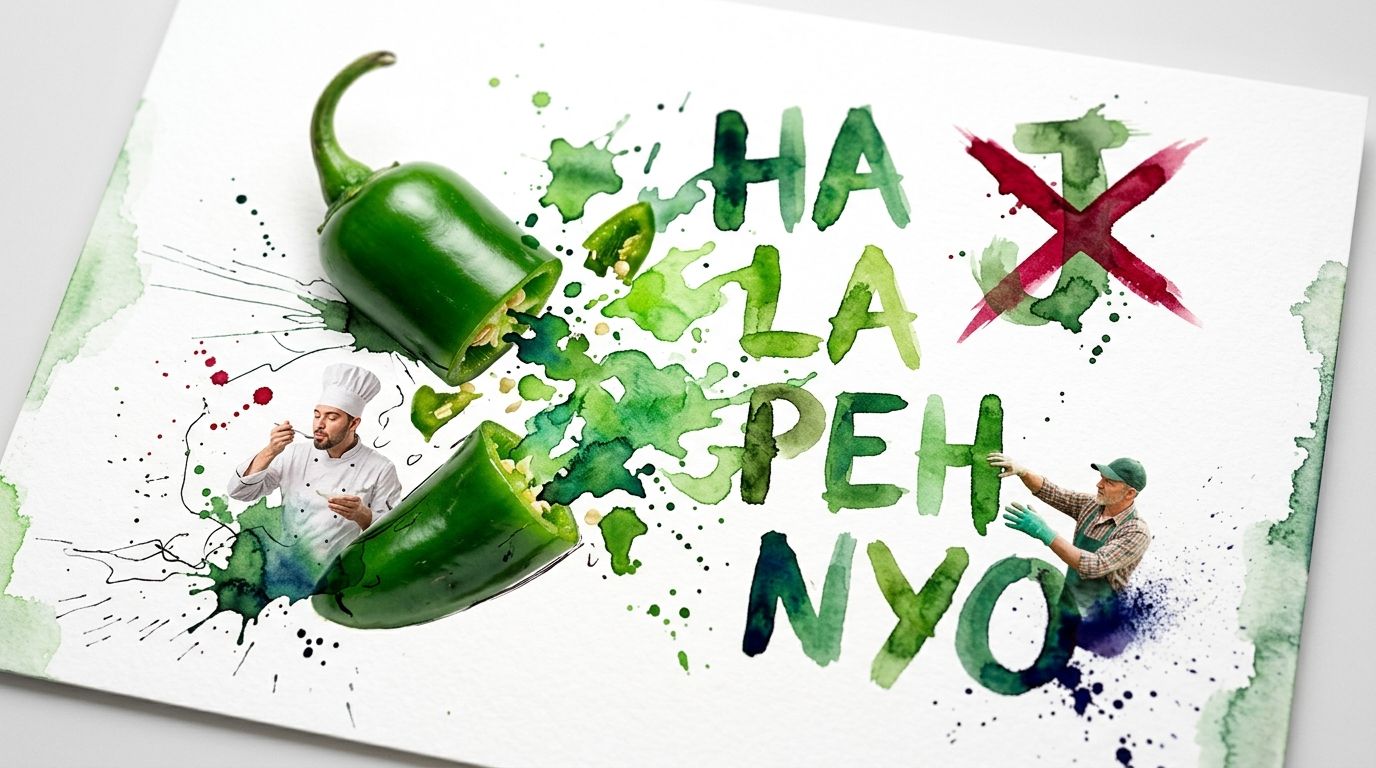
The easiest way to learn this word is to split it into parts. Instead of seeing one long unfamiliar word, it helps to feel four small sound groups.
Why the first sound surprises learners
In both major English dictionary forms, the first sound is an h sound, not the English j sound. Cambridge shows British English as /ˌhæl.əˈpeɪ.njəʊ/ and American English as /ˌhɑː.ləˈpeɪ.njoʊ/ on its jalapeño pronunciation page.
That means the beginning is:
- American English: hah
- British English: hal
So the first step is simple. Start like hat, not like jam.
How to shape the vowels and the ñ sound
The middle of the word is usually easier.
A practical breakdown looks like this:
| Part | Say it like | What to do physically |
|---|---|---|
| ja | hah or hal | Open the mouth gently and let air out softly |
| la | lah or luh | Keep the tongue light behind the top teeth |
| pe | pay | Lift the voice slightly here |
| ño | nyoh | Move the middle of the tongue up toward the roof of the mouth |
The most difficult part is the ñ. In Spanish, jalapeño is pronounced /xa.laˈpe.ɲo/, and the ñ is a single nasal sound made with the tongue against the hard palate, as described in this discussion of the Spanish pronunciation.
For many English learners, a useful bridge sound is the middle of canyon. That gives a close English-friendly version of ny.
Say the rhythm like this: ha-la-PE-nyo
That stress pattern matters. If the voice becomes stronger on PE, the whole word sounds more natural right away.
A learner can also try this short drill:
- Say hah
- Add lah
- Add PEN
- Finish with yoh
- Blend it slowly, hah-lah-PEN-yoh
For extra pronunciation practice with another food word, this guide to how to pronounce guacamole can help build the same kind of sound awareness.
Common Mistakes and How to Fix Them
A lot of learners know the word as soon as they hear it, then say a different version when they order food out loud. That gap is normal. Pronunciation is a physical habit, so the fastest fix is to train one mouth movement at a time.
Mistake one, saying the j like English
Many English speakers start with j as in job. The result sounds like ja-la-PEN-yo.
Your mouth is following English spelling rules. To change that habit, start the word with breath before voice. The opening sound should feel closer to a soft h than a hard English j.
Try this in slow motion:
- let a little air out and say ha
- pause
- say ha again
- add la
- finish the word: ha-la-PEN-yo
If it helps, put your hand in front of your mouth. You should feel a light puff of air at the start.
Mistake two, turning ñ into a plain n
This mistake often happens because the written form without the tilde is common in everyday English. Once the eye sees n, the tongue wants to make a simple n sound.
The fix is physical, not mental. A plain n uses the front of the tongue. The ñ sound in jalapeño asks for a different shape. The middle of the tongue lifts higher, a bit like the sound you hear in canyon.
Practice the contrast:
- no
- nyo
- pe-no
- pe-nyo
Say those pairs slowly and notice the difference in tongue position. If nyo feels awkward, that is a good sign. It means you are asking your mouth to learn a new pattern.
Learners who want extra practice with sound differences in familiar words can use this guide to the pronunciation of favourite in different English accents. It trains the same kind of listening and mouth control.
Mistake three, stressing the wrong syllable
Some speakers put the strongest beat on JA, or on LA. English listeners usually catch word rhythm fast, so stress matters more than many learners expect.
The strongest part should land on PE. A simple way to feel that is to treat the word like a four-step tap pattern: ha la PE nyo. The third step gets the energy.
Use this short drill:
- say the word once
- tap the table on PE
- say it again with a stronger voice on that syllable
- put it in a short sentence
For example:
- “Extra jalapeños, please.”
- “I want jalapeño on top.”
Small corrections add up. One better first sound, one clearer ñ, and one strong PE can make the whole word sound more natural and much easier to say with confidence.
Pronunciation in the Real World
You order tacos, say jalapeño carefully, and then hear three different versions from the people around you. That can feel confusing at first. It does not mean your pronunciation is wrong.

Standard pronunciation and local variation
A dictionary gives you a clear model. Real speech adds local habits, personal accents, and different levels of care. Some speakers keep the Spanish-style ñ sound very clearly. Others use a version that sounds closer to a plain English n.
That difference is common with food words that travel from one language into another. As a word gets used in daily English, some speakers keep more of the original sound, while others shift it toward the sound patterns they already know.
A useful way to handle this is to keep one steady goal for your own speech. Use a clear standard form that people recognize easily. Then train your ear to expect a few nearby versions when other people speak.
Why flexibility helps more than perfection
Pronunciation works like listening in different lighting. The object is still the same, but it may look a little different depending on where you are. With jalapeño, the word stays recognizable even when the final sound changes slightly from speaker to speaker.
This matters in real conversations. In a restaurant, at work, or while traveling, your job is not to copy every regional habit. Your job is to say the word clearly enough that people understand you, and to stay calm if their version sounds a little different.
Try this simple rule:
- Say your clearest version when you speak
- Expect small sound changes when you listen
- Focus on understanding, not judging which version is “perfect”
If you enjoy comparing how everyday words shift across accents, this guide to the pronunciation of favourite in British and American English gives another helpful example.
A good pronunciation choice is one that feels manageable in your mouth and clear to the listener.
That mindset builds confidence faster than chasing one flawless version. You are building a speaking skill, not memorizing a single performance.
Practice Your Pronunciation Out Loud
Pronunciation improves fastest when the mouth gets real speaking practice. Reading explanations helps, but spoken repetition is what turns knowledge into a habit.
Short drills that build speaking confidence
A learner can start with very short lines:
- Could I have extra jalapeños, please?
- This salsa has a mild jalapeño flavor.
- Do these tacos come with jalapeños?
A useful method is simple:
- Say the word alone.
- Say it at the end of a sentence.
- Say it in the middle of a sentence.
- Say the whole sentence at normal speed.
That last step matters because many learners can pronounce a word alone, but lose control when they put it into connected speech.

Why spoken feedback matters
Private speaking practice can help shy learners a lot. Verse is an AI conversation partner for spoken English practice. It lets learners talk out loud and get instant, judgment-free feedback on pronunciation, grammar, vocabulary, and fluency. Learners can also choose a British, American, or Australian accent, which is useful when they want to match the version of English they hear most often.
This kind of practice is different from silent study. Flashcards and grammar notes can support learning, but they can't train the physical movement of speech in the same way. Speaking, hearing a response, and getting feedback right away creates a much more useful loop.
Learners who want more ideas for daily drills can read how to practice pronunciation in English. There's also a free, no-signup demo on the Verse homepage, and the full product is a paid subscription at $12/month.
A word feels difficult until the mouth has said it enough times that it no longer feels new.
A learner doesn't need perfect pronunciation to sound good. A few calm repetitions out loud can make jalapeño feel much easier, and each time that word is spoken clearly, speaking confidence grows.