How to Follow Up After Interview: Email Samples 2026
July 20, 2026 · 15 min read
The interview is over. The laptop is closed. Then the doubt starts.
Did the answer sound clear enough? Was the grammar correct? Did the interviewer understand the main point? Many English learners know this feeling well. A follow up after interview can feel stressful because it isn't only about being polite. It also feels like one more language test.
The good news is that a follow-up email doesn't need perfect English. It needs clear English. A short, thoughtful message can show professionalism, interest, and strong communication. It can also give the candidate one more chance to say something more clearly than they said it in the room or on the call.
Table of Contents
- Why Sending a Follow Up Email Matters
- The Right Timing and Subject Lines
- How to Write a Memorable Thank You Email
- Follow Up Emails for Every Situation
- Special Wording Tips for English Learners
- Your Final Follow Up Checklist
Why Sending a Follow Up Email Matters
After an interview, many candidates wait silently and hope for good news. That often feels safer than writing another message in English. But silence can waste a useful chance.
A follow-up email helps in three ways. It shows respect for the interviewer's time. It reminds the company that the candidate is still interested. It also leaves one more positive impression after the conversation ends.
One simple example shows why this matters. A candidate may finish an interview feeling average, not excellent. Later, that candidate sends a short thank-you email, mentions one topic from the conversation, and shows steady interest. That small action can make the candidate easier to remember.
Practical rule: A follow-up email is not begging for the job. It's a professional note that shows attention, maturity, and clear communication.
There is another reason this step matters so much. CareerBuilder data shows that 57% of candidates do not send thank-you notes after an interview, so sending one simple email already puts a candidate ahead of more than half of other applicants, as noted in this summary of interview statistics.
For English learners, this is especially valuable. The interview itself can move fast. There may be pressure, unfamiliar words, or cultural details that are hard to read in real time. The email gives the candidate a quieter moment to communicate well.
What a good follow-up really says
A strong follow-up doesn't need advanced vocabulary. It sends a few clear messages:
- Thank you mattered: The candidate noticed the interviewer's time and effort.
- Interest is real: The candidate still wants the role after learning more.
- Communication is solid: The candidate can write a clear, professional note.
- Details were remembered: The candidate listened carefully during the conversation.
Some readers worry that a thank-you email looks too formal or unnecessary. In most professional settings, it doesn't. It usually looks organized and thoughtful.
That is why a follow up after interview should be seen as part of the interview, not something separate from it.
The Right Timing and Subject Lines
Timing causes a lot of confusion. Some candidates write too late because they want every sentence to be perfect. Others send too many messages because they feel anxious. A simple plan removes that pressure.
The strongest approach is a short sequence. Send a thank-you email within 24 hours, wait 5 to 7 business days before a status check-in, and send a final message after two weeks if there is still no reply. Each message should stay under 150 to 200 words, based on this follow-up timing guide.
When to send each message
The table below keeps the schedule simple.
| Action | When to Send |
|---|---|
| Thank-you email | Within 24 hours after the interview |
| Status check-in | 5 to 7 business days later |
| Final follow-up | After two weeks of silence |
The first message should go out soon because the conversation is still fresh. A later status email works best when it sounds calm, not rushed. The final message is a closing note, not a repeated demand.
A short delay is normal in hiring. A calm follow-up sounds professional. Repeated daily messages usually don't.
If the interviewer gave a decision date, it helps to respect that date. A candidate can wait until the timeline passes, then send a short note.
Subject lines that sound professional
Many English learners spend too much time on the subject line. It doesn't need to be clever. It should be clear so the interviewer knows exactly what the email is about.
These subject lines work well:
- Thank you for your time today
- Thank you, [Job Title] interview
- Following up on the [Job Title] interview
- Thank you, great speaking with you
- Checking in on the [Job Title] role
Simple subject lines are usually best because they are easy to scan. They also reduce the risk of sounding too casual or too dramatic.
A few subject lines can create problems:
- Just checking...
- Any updates???
- Still waiting
- Please respond
These can sound impatient, even when the writer doesn't mean that.
Two quick language tips
English learners often ask whether "follow up" should sound formal or friendly. In most job emails, neutral is best. Not too cold, not too personal.
A candidate can also match the interview tone a little. If the interviewer was warm and conversational, the email can sound warm too. If the interview was formal, the email should stay more formal.
For a follow up after interview, clarity beats style. The reader should understand the purpose in seconds.
How to Write a Memorable Thank You Email
The best thank-you emails don't try to say everything. They do a few things well. They thank the interviewer, mention one specific part of the conversation, and end with a professional next step.
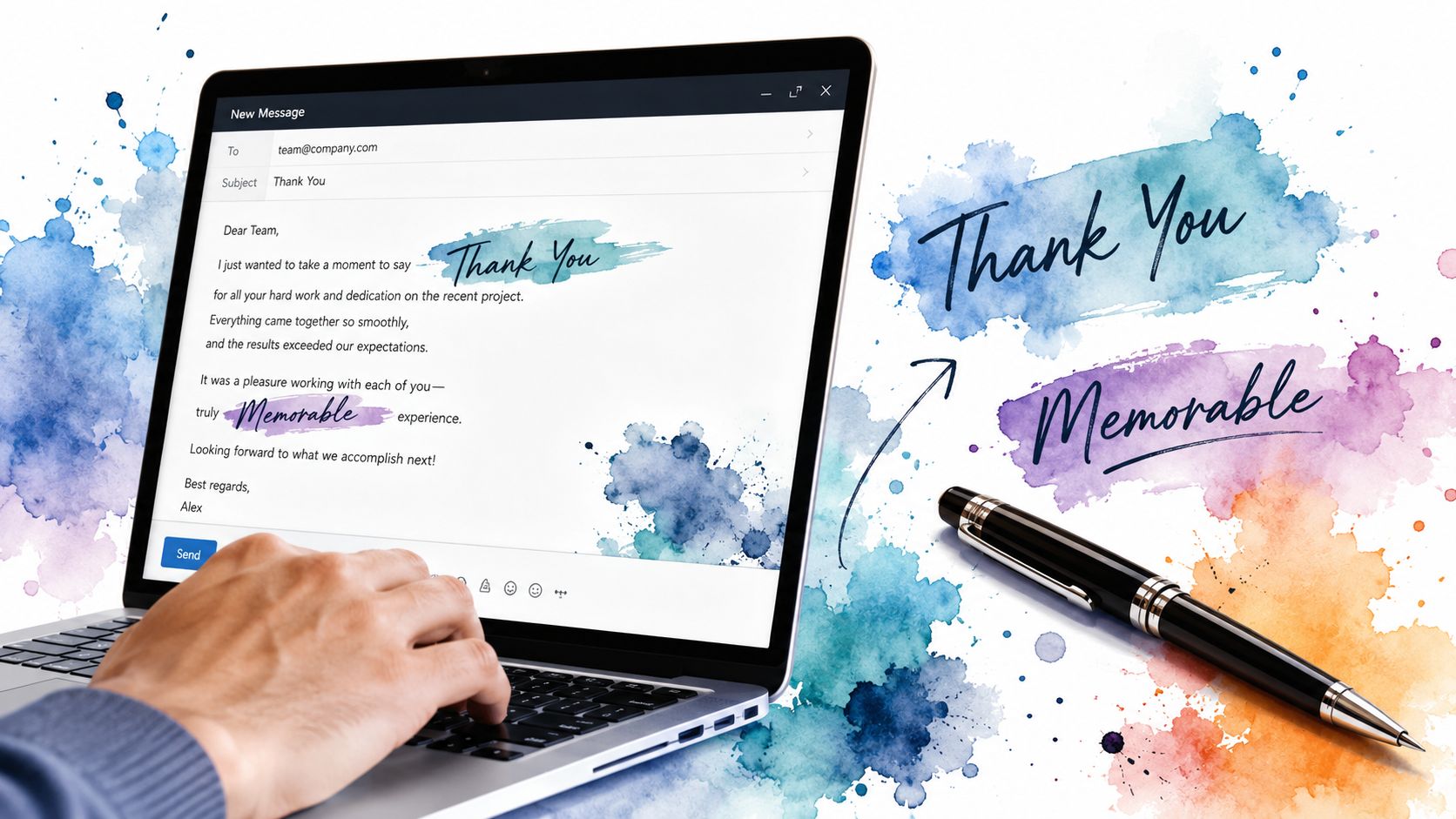
A generic message is easy to forget. More effective follow-ups ask for a timeline update when needed and can briefly clarify one point that felt weak in the interview, according to this guide on better interview follow-up messages. That is why one personal detail matters more than fancy wording.
Readers who want more examples can also study these thank-you email after interview examples.
The three parts of a strong message
A memorable email usually has three parts.
1. A polite opening
Start with thanks and name the interview.
Example:
Thank you for speaking with me today about the Marketing Coordinator role.
This works because it is direct and easy to understand.
2. A personalized middle
This is the most important part. Mention one specific detail from the conversation. It could be a project, a team goal, a challenge, or a tool the company uses.
Example:
It was especially interesting to hear how the team is improving customer onboarding for new users.
That sentence proves the candidate listened. It also sounds more real than "I enjoyed learning more about the company."
3. A professional closing
End with interest and a simple next-step sentence.
Example:
The conversation made me even more interested in the role. Please let me know if any other information would be helpful.
That closing is polite and steady. It doesn't push for a decision.
Two email samples
Here is a short version for a busy candidate.
Sample 1
Subject: Thank you for your time today
Dear Ms. Chen,
Thank you for speaking with me today about the Customer Support Specialist role. It was great to learn more about how the team handles international client communication.
The conversation made me even more interested in the position. Please let me know if there is any other information I can share.
Best regards,
Ana Silva
This sample is short, but it still feels personal.
Here is a slightly fuller version.
Sample 2
Subject: Thank you, Product Analyst interview
Dear Mr. Hassan,
Thank you for taking the time to meet with me today about the Product Analyst role. It was helpful to learn more about the team's work on user feedback and reporting.
The part of the conversation about turning customer comments into clear product priorities was especially interesting. That focus matches the kind of work the candidate enjoys most, especially when information needs to be organized and shared clearly across teams.
The conversation increased interest in the role. Please let the candidate know if references or any additional information would be useful. The candidate would also be glad to hear about the expected timeline for next steps.
Kind regards,
Daniel Kim
What readers often get wrong
Some candidates think a thank-you email should repeat every answer from the interview. That usually makes the email too long. Others write only one line, which can feel rushed or empty.
A better balance looks like this:
- Keep it focused: One specific interview detail is enough.
- Keep it brief: Short emails are easier to read.
- Keep it useful: Add one clear thought, not five.
- Keep it calm: Interest is good. Pressure is not.
Follow Up Emails for Every Situation
After the thank-you email, the process can become unclear. Silence is common. Some interviews continue to a second round. Sometimes the company says no. Each situation needs different wording.

A safe rule is this. Wait about one week before sending a follow-up if there is no response, and limit follow-ups to a maximum of 2 or 3 emails so the message doesn't feel pushy, as explained in this recruiter advice video on interview follow-up timing.
For readers who want to practice the phrase itself before writing, this speaking page can help: how to say "I wanted to follow up".
If there is no reply after a week
This is the most common situation. The candidate already sent a thank-you email and heard nothing.
A good status message should ask for a timeline update, not demand a decision.
Sample email
Subject: Following up on the Sales Associate interview
Dear Mr. Lopez,
I hope you are well. The candidate wanted to follow up regarding the Sales Associate interview and ask whether there are any updates on the hiring timeline.
The candidate remains very interested in the role and would be happy to provide any additional information if needed.
Best regards,
Nina Patel
This wording works because it is respectful and clear. It asks one question only.
After a second or third interview
Later-round follow-ups can be slightly more confident. At this stage, the company already knows the candidate better. The message can refer to a deeper topic from the conversation.
Sample email
Subject: Thank you after today's interview
Dear Ms. Walker,
Thank you again for today's conversation about the Operations role. It was especially useful to learn more about the cross-team communication challenges during busy periods.
The discussion strengthened the candidate's interest in the position. The candidate would be glad to support that kind of coordination work and is happy to share anything else the team may need.
Kind regards,
Omar Rahman
The tone here is warmer because the relationship is a little stronger.
The later the interview stage, the more useful a specific callback becomes. It helps the interviewer remember the exact conversation, not just the candidate's name.
After a rejection email
A rejection message still deserves a professional reply. This can protect the relationship and leave a good impression for future roles.
Sample email
Subject: Thank you for the update
Dear Ms. Green,
Thank you for letting the candidate know about the decision. Although the candidate is disappointed, it was a pleasure to speak with the team and learn more about the role.
The candidate appreciates the time and consideration and would be glad to stay in touch about future opportunities.
Best regards,
Lina Torres
This response is simple and graceful. It doesn't argue. It doesn't ask the company to change the decision. It leaves the door open.
Special Wording Tips for English Learners
For many English learners, the hardest part isn't knowing when to send the email. It's knowing how to sound professional without sounding unnatural.
That worry makes sense. Some phrases are common in workplace English, but they may feel too formal, too soft, or too indirect. A strong follow up after interview should sound calm and confident, not complicated.

72% of international hiring managers say communication style is a key factor, and for non-native speakers the follow-up email can work as a way to enhance clarity when a point was hard to express in the interview, as described in this guide to interview follow-up for job seekers.
Readers who are preparing both spoken and written interview English may also find help in these English tips for job interviews.
Simple phrases that sound calm and confident
Many candidates use phrases that are too strong, such as "I am the best person for this role," or too weak, such as "Sorry to bother you." Neutral language is usually better.
These options sound professional and clear:
- To say thank you: "Thank you for taking the time to speak with me."
- To show interest: "The conversation increased interest in the role."
- To mention a detail: "It was especially helpful to hear about..."
- To ask politely: "The candidate wanted to ask whether there are any updates on the timeline."
- To offer more information: "The candidate would be glad to share anything else that may be helpful."
A simpler phrase is often better than a more advanced one. Short sentences reduce mistakes and usually sound more natural.
How to correct one unclear point
English learners can use the follow-up email very effectively.
Maybe the candidate understood the question but couldn't explain the answer clearly. Maybe the right word didn't come in time. The email gives space to fix one small issue.
A good correction should be brief. It shouldn't become a second interview.
Example:
The candidate also wanted to briefly clarify one point from the interview. When discussing project deadlines, the candidate meant that clear weekly check-ins helped the team solve problems early and stay organized.
This works because it is specific and calm. It doesn't say, "The earlier answer was bad." It only makes the meaning clearer.
A few helpful language choices are below:
- Use "briefly clarify" instead of "correct my mistake" if the point was about wording, not a factual error.
- Use "what the candidate meant was" when the idea was right but the English felt unclear.
- Use one example only so the email stays focused.
Saying one idea more clearly is a strength. It shows self-awareness and adaptability.
Practicing these sentences out loud helps a lot. Spoken practice makes the written words feel more natural. Some learners use the Verse homepage demo to rehearse interview phrases aloud before sending an email. That kind of real speaking practice, with instant feedback on grammar, vocabulary, and fluency, can build more confidence than silent study alone.
Your Final Follow Up Checklist
A good follow-up email isn't about perfect English. It's about clear, thoughtful communication. That skill grows with practice, especially when the candidate says key phrases out loud before writing them.
Use this checklist before sending any follow up after interview:
- Send the first email quickly: Thank the interviewer within 24 hours.
- Keep each email short: Stay under 150 to 200 words.
- Add one real detail: Mention one specific part of the conversation.
- Ask the right question: Request a timeline update, not an immediate decision.
- Clarify only one weak point: Fix one unclear idea if needed.
- Use simple subject lines: Clear is better than clever.
- Wait before checking in again: Give the process time.
- Stop at 2 or 3 follow-ups: More can hurt the impression.
- Read the email out loud: This helps catch awkward wording.
- Stay polite after any outcome: Even a rejection reply can leave a strong impression.
Practice speaking the message out loud first. Clear spoken English often leads to clearer written English, and that confidence shows.